Apps XReadyLab VR Physics: Thermodynamics
Learning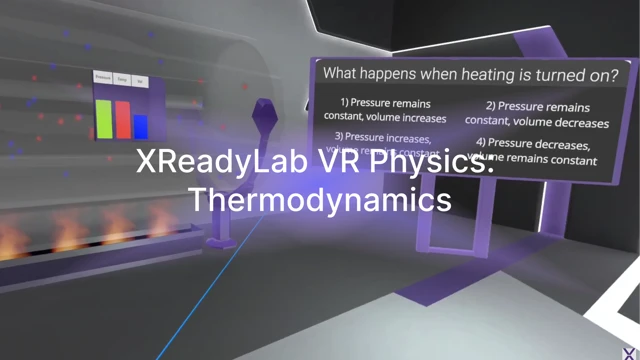
What students do in VR:
Manipulate gas containers → change pressure, volume, and temperature in real time
Generate and analyze P–V and P–T graphs → interpret system changes
Simulate isothermal, isobaric, and isochoric processes → compare conditions
What students learn:
Relationship between pressure, volume, and temperature of gases
Interpretation of pressure–volume (P–V) and pressure–temperature (P–T) diagrams
Isothermal, isobaric, and isochoric processes
For Schools
Aligned with IB, NGSS, TEKS, College Board, Cambridge, CBSE, and other international and national curricula.
Includes:
Ready-to-use Lesson Plans and Engagement Playbooks
Structured guidance for classroom implementation:
Before, during, and after VR simulation
Group organization and activity design
Key topics, simulation objectives, and instructional support
Reflection questions, analytical tasks, and practical assignments
Assessment tools and troubleshooting checklist
Supports both classroom use and home learning.
| comfort | ⦾ Moderate |
| age rating | 0+ Everyone |
| storage | 0.6 GB |
| website | xreadylab.com |
| developer | XReadyLab |
| publisher | XReadyLab |
| connection | Internet required |
| app version | 2.1.3 |
| languages |
English
|
Price History
- base price $9.99 from Mar 26
- - no discounts